You buy a lead list. Let's say 1,000 records. You upload it, run the campaign, and here's roughly what happens: 220 numbers are disconnected or invalid. 85 are on the DNC Registry. 140 are landlines in a market that's gone 70% mobile. 110 were sold to 5 other agents in the last 30 days. That's 555 records — over half your list — that had no realistic path to conversion before you dialed the first number.
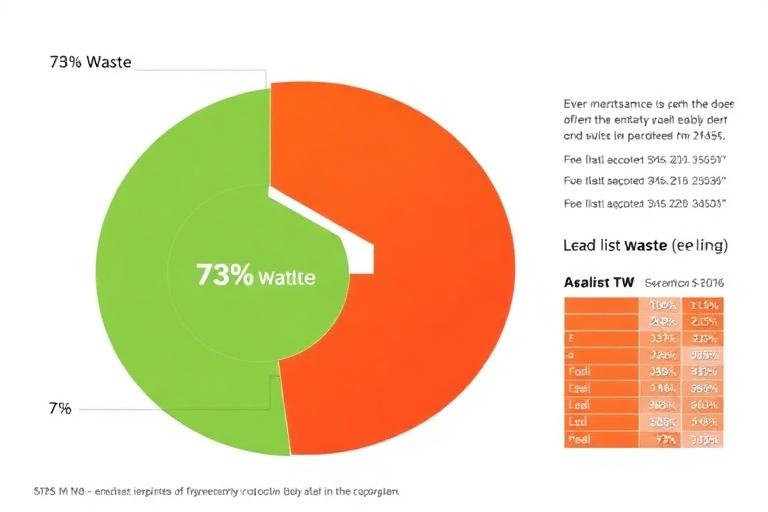
Some studies put the effective percentage of a typical purchased insurance lead list at 27% — meaning 73 cents of every dollar you spend on lead lists is wasted.[1]
Where the 73% Goes: Breaking Down the Waste
Disconnected and Inactive Numbers: ~18–22%
The CDC's National Health Interview Survey tracks that U.S. residential mobility runs at about 8.4% annually.[2] For a list that's 18 months old, that's well over 10% of numbers that have moved. Add in numbers that were wrong at capture, deactivated VoIP numbers, and reassigned numbers — and you're typically looking at 18–22% unusable on data quality grounds alone.
DNC-Registered Numbers: ~5–12%
The National DNC Registry holds 249 million numbers as of 2024. On any given list of insurance prospects (typically adults 45–75, who register at higher rates), expect 5–12% to be DNC-registered.[3]
Over-Contacted and Burned Leads: ~15–20%
The lead that's been sold to 8 different agents and has heard from all of them. By the time your agent dials, this prospect either has your carrier's prefix on a block list, has already purchased, or has become hostile to insurance calls.
Demographic Mismatch: ~10–15%
If you're selling Medicare Supplement and your list includes 35-year-olds who registered their number 15 years ago, that's wasted dials.
Aged Data: ~10–15%
Data that was accurate 18 months ago has decayed. The person moved. Changed carriers. Changed their mind. The moment of intent is long gone.
What Happens to Your Team on a 27%-Effective List
Your agents don't know which 27% is good. They dial all 1,000 records. They spend 73% of their time on numbers that can't convert. By the end of the week, your best reps are demoralized. Your call-to-conversation rate is in the single digits. Burnout in outbound insurance sales is primarily a data quality problem.
What a Clean List Actually Looks Like
A properly scrubbed and filtered insurance lead list — with DNC removal, active number verification, mobile confirmation, deduplication, and demographic filtering applied — typically returns 60–75% of the original record count but those records represent close to 90% of the conversion potential of the original list.
Fewer dials. More conversations. Higher agent morale. Dramatically lower TCPA exposure.
See it on your own list before you buy anything: Upload your current lead list to Sky Net's pricing. The first 100 records are free. You'll see exactly how many are disconnected, DNC-registered, and TCPA-flagged — in under 5 minutes, no credit card required.
References
- LIMRA. (2022). Insurance Sales Lead Quality and Contact Rate Benchmarking Study.
- U.S. Census Bureau. (2023). American Community Survey: Geographic Mobility in the United States. https://www.census.gov/topics/population/migration.html
- Federal Trade Commission. (2024). National Do Not Call Registry Data Book FY 2023. https://www.ftc.gov/reports/dnc-data-book