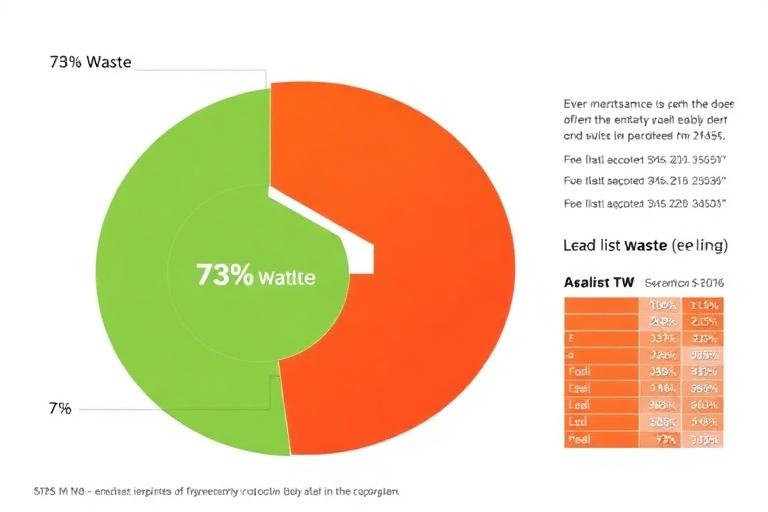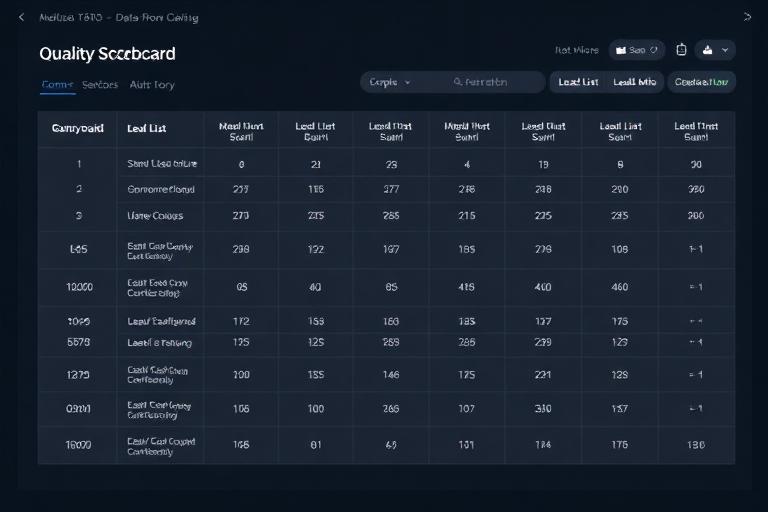
Most agents evaluate a lead list by price per record and the vendor's sales pitch. Neither of those predicts conversion. What actually predicts whether a list will perform are seven specific, measurable characteristics of the data itself — things you can quantify before you dial record one.
Metric 1: Active Number Rate
Definition: Percentage of numbers in the list that are currently in service.
What good looks like: 85%+ for a well-maintained list. Below 70% suggests the data is old or poorly sourced.
How to check: Run a carrier lookup or number validation service on the list before purchase.
Metric 2: Mobile Percentage
Definition: What percentage of numbers are confirmed mobile (vs. landline or VoIP).
What good looks like: For insurance sales, 60–75% mobile is a solid range. Higher than 85% in a senior demographic list should be investigated — it may indicate synthetic data.
Why it matters: Mobile = higher contact rate and SMS follow-up capability. But also TCPA consent requirement for ATDS campaigns.
Metric 3: DNC Registration Rate
Definition: Percentage of numbers on the National DNC Registry.
What good looks like: Under 3% for a recently scrubbed list. 5–12% in an unscrubbed list is common — and represents significant TCPA exposure.
Metric 4: Data Age
Definition: How long ago was the lead originally captured? A list compiled last month from 18-month-old data is 18 months old.
What good looks like: Under 90 days for high-intent insurance leads. Under 6 months is workable. Over 12 months: expect significant data decay.
The Insurance Information Institute's data shows approximately 8.4% of Americans move each year — an 18-month-old list has lost contact accuracy on roughly 12% of records.[1]
Metric 5: Exclusivity (Times Sold)
Definition: How many other buyers have received this same lead record?
What good looks like: Exclusive (1 buyer) or semi-exclusive (2–3 buyers). A lead sold to 10+ buyers has been called by 10+ agents — the prospect is either burned out or has already purchased.
Metric 6: Demographic Match Score
Definition: How closely does the demographic profile match your target buyer?
- Medicare agents: Age 64–70 (T65 window), household income $25K–$75K, homeowner status
- Final expense agents: Age 50–80, household income $15K–$45K, no existing life insurance
- Term life agents: Age 30–55, household income $50K+, dependent children present
A list where 40% of records don't match your target profile is 40% wasted from the first dial.
Metric 7: Intent Signal Strength
Definition: How strongly did the consumer signal interest in insurance at capture?
This is the hardest metric to verify but the most important. An inbound call where someone asked for a Medicare quote is a much higher intent signal than a name appended from a public database. Ask vendors specifically how intent was captured.
Calculating Your List Quality Score
Assign a score from 1–10 for each metric (10 = ideal). A score of 60+ (out of 70) represents a high-quality list. Below 40 is a list that will likely underperform regardless of script or dialer settings.
When you upload any list to Sky Net's pricing, you get back metrics 1–3 automatically (active status, line type, DNC status) for every record. First 100 records free.
References
- Insurance Information Institute citing U.S. Census Bureau data. (2023). American residential mobility rate. https://www.iii.org